
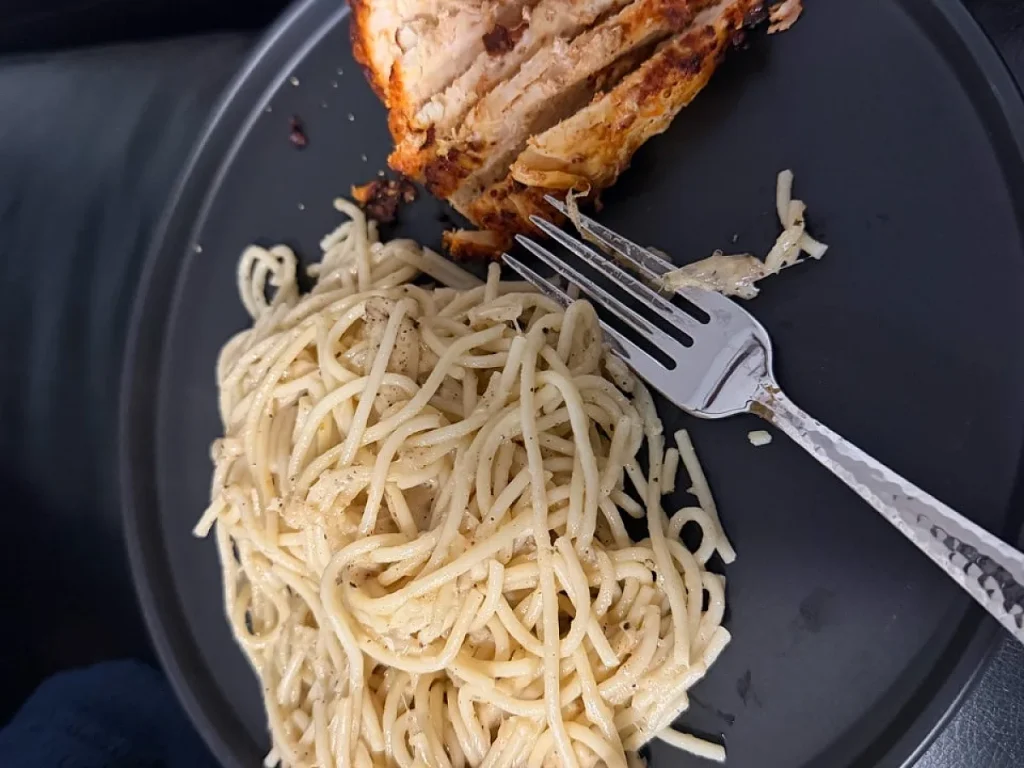
Cacio e pepe means cheese and pepper, and that is the whole shopping list beyond the pasta. Half a pound of spaghetti, four ounces of grated Parmesan, two teaspoons of cracked black pepper, olive oil and butter. Nothing else goes in.
The trick is not the ingredients, it is the heat. Cheese added to a hot pan seizes into strings. Cheese added to a warm pan with a little starchy water turns into a sauce that clings to every strand. You will pull the pan off the burner before the cheese goes in, and that one move is the difference between dinner and a gluey mess.
This version toasts the pepper in butter and olive oil first, which wakes it up, then loosens everything with pasta water saved from the pot. It serves four and takes about as long as the noodles need to boil.
Step-by-Step Instructions
1. Bring a large pot of salted water to a boil. Cook the pasta for 1 minute less than the package instructs, until al dente. Save 1 cup (240 ml) pasta water, then drain.
2. Heat a large sauté pan over medium heat. Add the olive oil, butter, and pepper, and stir to combine.
3. Stir in the reserved pasta water.
4. Toss in the cooked pasta. Reduce the heat to low.
5. Add the Parmesan and toss until the cheese is melted and the pasta is well-coated.
6. Season with salt, if desired.
7. Enjoy!
Tips & Tricks
- Save a full cup of pasta water before you drain. You will not use all of it, but running short is the most common way this dish fails.
- Grate the cheese before the water boils. Once the pasta is drained, everything moves fast and there is no time to hunt for the grater.
- Take the pan off the heat before the cheese goes in. Residual warmth is enough to melt it. Direct heat is what makes it clump.
- Toss constantly once the cheese is in. Stillness lets the cheese settle into one lump instead of coating the strands.
Pro Tips
How to Store Cacio e Pepe (Spaghetti with Cheese and Pepper)
Refrigerator
Keep leftovers in a sealed container for up to two days. The pasta will absorb the sauce and firm up in the cold.
Freezer
Not recommended. The cheese sauce separates and the noodles go mushy when thawed.
Reheating
Warm in a skillet over low heat with a splash of water and a fresh pat of butter, tossing until it loosens. It will not be as creamy as the first time, so adding a few freshly cooked noodles helps.
Frequently Asked Questions
Q: Why did my cheese turn into clumps?
The pan was too hot. Cheese proteins tighten and squeeze out their fat when they hit high heat, which is what makes those little strings. Take the pan off the burner before the cheese goes in and toss without stopping.
Q: Can I use pre-grated cheese from a tub?
It usually has anti-caking starch on it, which keeps it from melting smoothly and can make the sauce grainy. Grate a block yourself if you can. It takes about two minutes.
Q: Do I have to use both butter and olive oil?
That is how this version is built, and the two together give the pepper something to bloom in without burning. Using only butter browns faster, and using only oil gives a less rounded sauce.
Q: How much pasta water should I actually add?
Start with a couple of tablespoons in the pan before the pasta goes in, then add more by the spoonful while tossing if the sauce looks tight. You will rarely need the whole cup, but save it anyway.
Q: Can I make this ahead for a crowd?
Not really. The sauce tightens within minutes of leaving the pan. Cook it in batches and serve each one straight away.
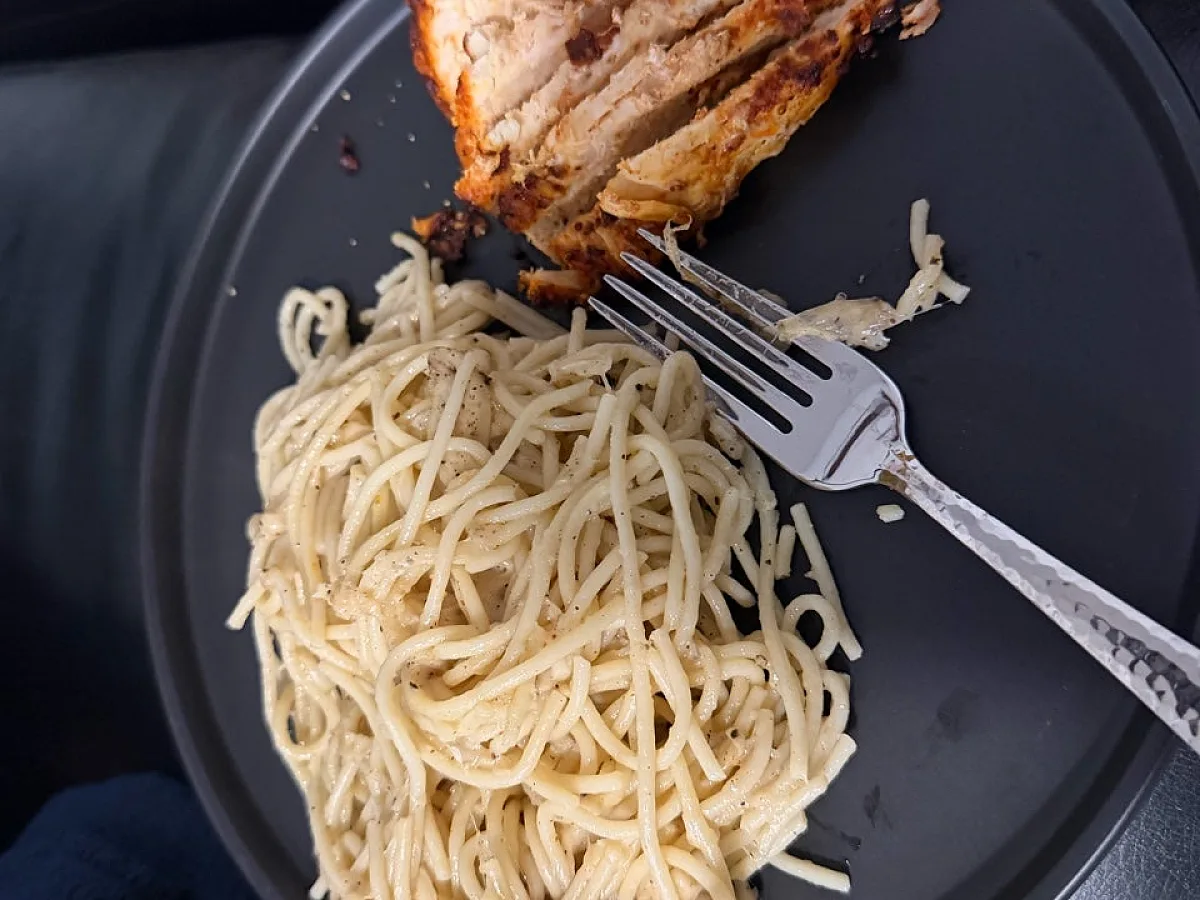
Cacio e Pepe: Spaghetti With Cheese and Pepper
Four ounces of Parmesan, two teaspoons of cracked pepper and a splash of pasta water turn half a pound of spaghetti into a glossy, creamy Roman classic.
Ingredients
Instructions
- 1Bring a large pot of salted water to a boil. Cook the pasta for 1 minute less than the package instructs, until al dente. Save 1 cup (240 ml) pasta water, then drain.
- 2Heat a large sauté pan over medium heat. Add the olive oil, butter, and pepper, and stir to combine.
- 3Stir in the reserved pasta water.
- 4Toss in the cooked pasta. Reduce the heat to low.
- 5Add the Parmesan and toss until the cheese is melted and the pasta is well-coated.
- 6Season with salt, if desired.
- 7Enjoy!
Questions or cooking notes?
Ask about an ingredient or share a tip that could help someone else.