
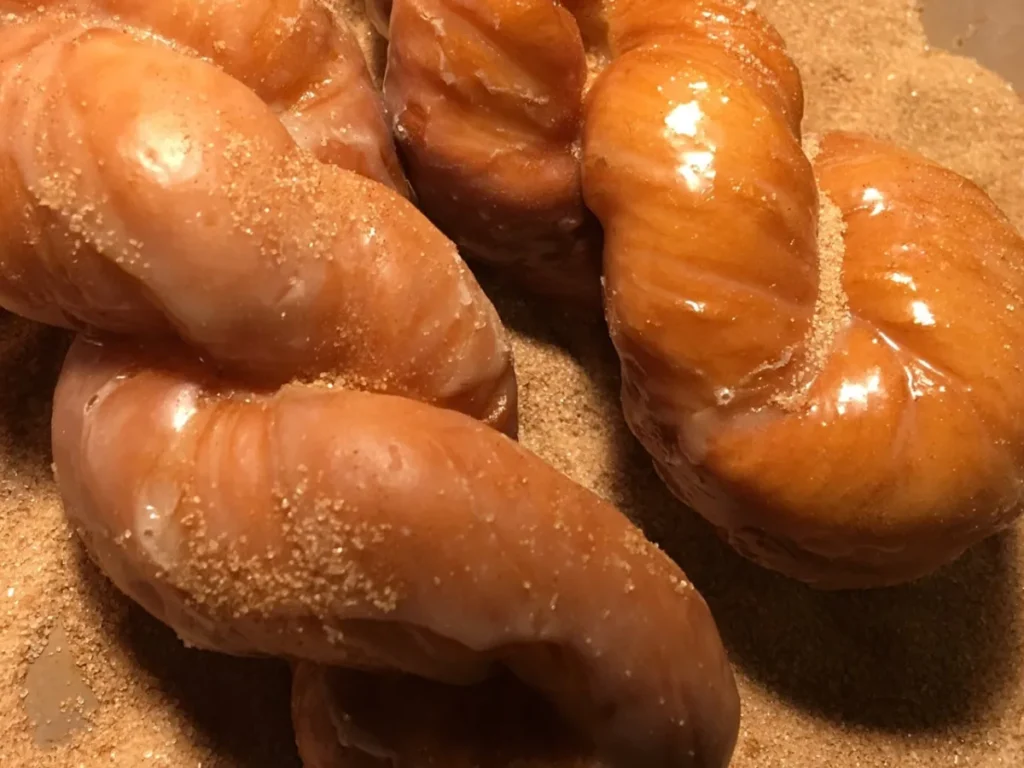
Kkwabaegi are Korean twisted doughnuts, and the twist isn't decoration. Rolling the rope between your hands builds tension, so when you lift it and pinch the ends together, the dough coils itself into that spiral shape. You get 12 doughnuts from one batch.
The dough is a soft, enriched yeast dough: milk, butter, egg, and a little sugar. It needs two rises, one hour then 30 minutes, and skipping either one gives you a dense doughnut instead of a light one. Fry at 350°F and roll the hot doughnuts in cinnamon sugar while they're still warm enough to hold it.
Everything here comes from a basic pantry. The only thing you might not have on hand is active dry yeast, and it needs to be fresh enough to foam within 10 minutes of hitting the warm milk.
Step-by-Step Instructions
1. Warm the milk mixture
Whisk the warm milk, melted butter, and 2 tablespoons sugar in a large bowl until the sugar dissolves.
2. Proof the yeast
Sprinkle the yeast over the milk and leave it alone for 10 minutes. It should look foamy on top. If it doesn't, the yeast is dead and you need a fresh packet.
3. Add salt and egg
Whisk in the salt and the egg until everything is combined.
4. Bring the dough together
Add the flour and stir with a spatula until a shaggy dough forms and pulls away from the sides of the bowl.
5. Knead the dough
Turn it out onto a floured surface and knead 3 to 5 minutes. It should feel soft and spring back slowly when you poke it.
6. First rise
Coat the bowl with a little oil, put the dough back in, and cover it. Leave it in a warm spot for 1 hour, until it has doubled in size.
7. Punch down and rest again
Dust the dough lightly with flour and press out the gas. Knead a few minutes until it's soft and smooth, then cover it and let it rise 30 minutes more, until doubled again.
8. Heat the oil
Pour about 2 inches of oil into a deep skillet and heat it over medium-high to 350°F (180°C).
9. Shape the ropes
Turn the dough onto a clean, floured surface and knead 3 to 5 minutes. It should be soft, shiny, and a little sticky. Cut it into 12 equal pieces and roll each into a ball. Cover the balls so they don't dry out.
10. Twist each doughnut
Roll one ball into a rope about 10 inches long and 1/2 inch thick. Put a hand on each end and roll them in opposite directions to build the twist. Lift the rope and pinch the two ends together. The dough twists itself as it hangs. Add extra twists with your fingers if you want a tighter spiral. Repeat with the rest.
11. Rest the shaped doughnuts
Set the twisted doughnuts on a tray, cover them, and let them rise 30 minutes. Flip them over halfway through.
12. Fry in batches
Turn the heat down to medium. Lower two or three doughnuts into the oil at a time and fry about 5 minutes, turning now and then, until they're golden brown all over. Doneness cue: deep golden on both sides and the doughnut feels light when you lift it. Drain on a wire rack.
13. Make the cinnamon sugar
Stir 1 cup (200 g) sugar and 2 tablespoons cinnamon together in a small bowl and spread it on a plate.
14. Coat and serve
Roll each warm doughnut in the cinnamon sugar until it's covered. Serve them while they're still warm.
Tips & Tricks
- Let the yeast sit in the warm milk mixture for the full 10 minutes. Foam on top means it's alive. No foam means start over with new yeast.
- Knead until the dough is soft and slightly tacky, not dry. A dry dough fries up tough.
- Let the shaped doughnuts rest 30 minutes before frying and flip them halfway through so both sides rise evenly.
- Keep the oil at 350°F. Too hot and the outside browns before the middle cooks. Too cool and they soak up oil.
- Drain on a wire rack, not paper towels. Paper traps steam and softens the crust.
Pro Tips
Variations
Half cinnamon sugar, half vanilla icing
Mix confectioners sugar with a splash of milk and a little vanilla extract until it's thin enough to drizzle, then dip half the cooled doughnuts in it instead of the cinnamon sugar.
Skip the cinnamon
Plain granulated sugar alone works if you want the dough flavor to come through.
Add a little nutmeg
A small pinch in the dough is a common addition, though it isn't in this version.
How to Store Kkwabaegi
Refrigerator
Keep leftovers in an airtight container at room temperature for up to 2 days. The fridge makes them dry and rubbery, so skip it unless your kitchen is hot and humid.
Freezer
Freeze fried doughnuts without the sugar coating for up to 2 months. Wrap each one tightly. Coat them after reheating.
Reheating
Warm in a 300°F oven for 5 to 7 minutes, or in an air fryer at 300°F for 3 to 4 minutes. Recoat in cinnamon sugar while they're warm.
Frequently Asked Questions
Q: Why did my doughnuts come out dense instead of fluffy?
Usually a skipped or shortened rise. The dough needs to double twice, once for an hour and once for 30 minutes. Cool kitchens slow this down, so judge by size, not the clock.
Q: Can I make the dough ahead of time?
Yes. Do the first rise, punch it down, then cover the bowl and put it in the fridge overnight. Let it come to room temperature and finish the second 30-minute rise before shaping.
Q: What oil should I fry in?
Something neutral with a high smoke point, like vegetable or canola. Olive oil will taste like olive oil, which fights the cinnamon sugar.
Q: How do I know the oil is at 350°F without a thermometer?
Drop in a small scrap of dough. It should sink briefly, then float up with bubbles forming around it within a few seconds. If it browns instantly, the oil is too hot.
Q: Can I bake these instead of frying?
You can, but they won't be Kkwabaegi. Baking gives a bread-like result with none of the crisp fried crust. If you want to avoid frying, treat them as a sweet twisted roll instead.
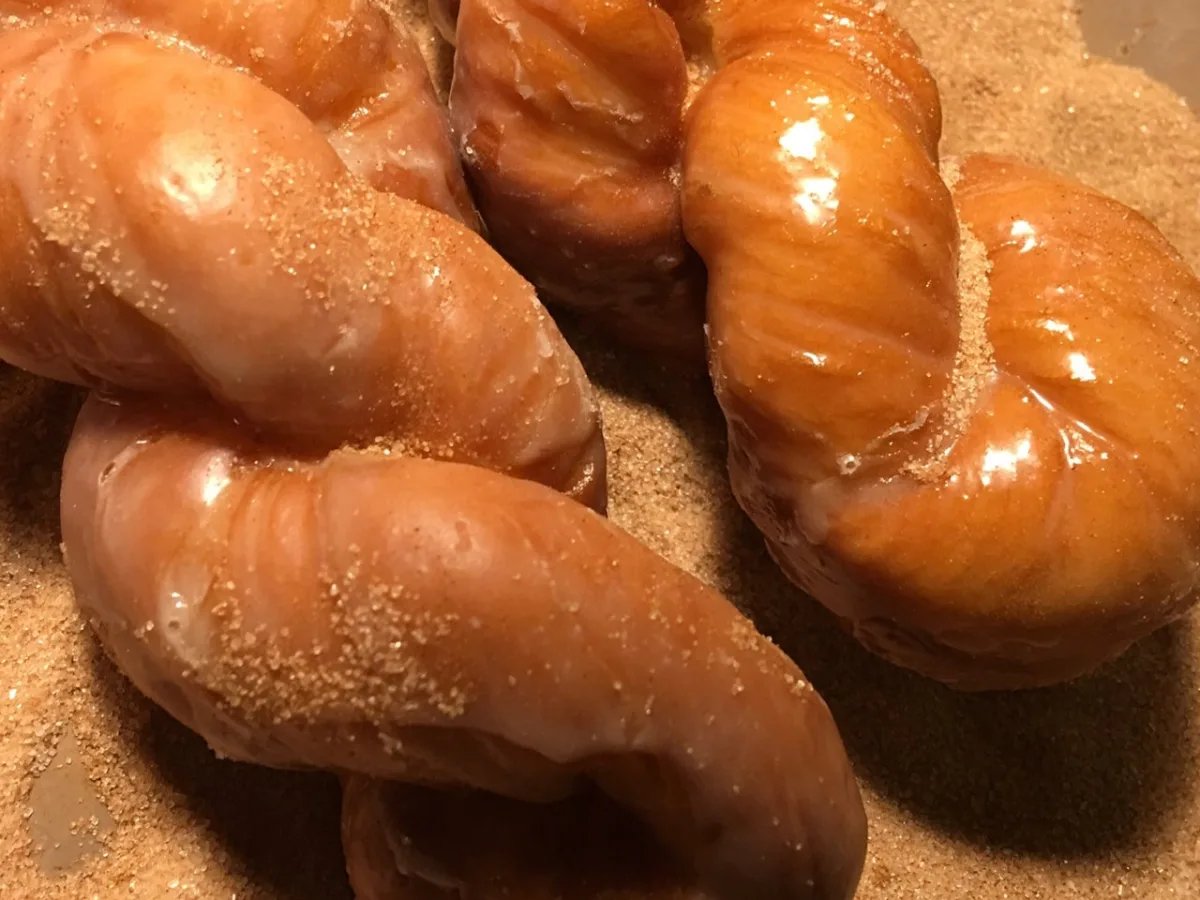
Kkwabaegi: Korean Twisted Doughnuts Recipe
Pillowy yeast doughnuts twisted by hand, fried golden, and rolled in cinnamon sugar. A dozen Kkwabaegi, ready in about two hours.
Ingredients
Instructions
- 1Warm the milk mixture — Whisk the warm milk, melted butter, and 2 tablespoons sugar in a large bowl until the sugar dissolves.
- 2Proof the yeast — Sprinkle the yeast over the milk and leave it alone for 10 minutes. It should look foamy on top. If it doesn't, the yeast is dead and you need a fresh packet.
- 3Add salt and egg — Whisk in the salt and the egg until everything is combined.
- 4Bring the dough together — Add the flour and stir with a spatula until a shaggy dough forms and pulls away from the sides of the bowl.
- 5Knead the dough — Turn it out onto a floured surface and knead 3 to 5 minutes. It should feel soft and spring back slowly when you poke it.
- 6First rise — Coat the bowl with a little oil, put the dough back in, and cover it. Leave it in a warm spot for 1 hour, until it has doubled in size.
- 7Punch down and rest again — Dust the dough lightly with flour and press out the gas. Knead a few minutes until it's soft and smooth, then cover it and let it rise 30 minutes more, until doubled again.
- 8Heat the oil — Pour about 2 inches of oil into a deep skillet and heat it over medium-high to 350°F (180°C).
- 9Shape the ropes — Turn the dough onto a clean, floured surface and knead 3 to 5 minutes. It should be soft, shiny, and a little sticky. Cut it into 12 equal pieces and roll each into a ball. Cover the balls so they don't dry out.
- 10Twist each doughnut — Roll one ball into a rope about 10 inches long and 1/2 inch thick. Put a hand on each end and roll them in opposite directions to build the twist. Lift the rope and pinch the two ends together. The dough twists itself as it hangs. Add extra twists with your fingers if you want a tighter spiral. Repeat with the rest.
- 11Rest the shaped doughnuts — Set the twisted doughnuts on a tray, cover them, and let them rise 30 minutes. Flip them over halfway through.
- 12Fry in batches — Turn the heat down to medium. Lower two or three doughnuts into the oil at a time and fry about 5 minutes, turning now and then, until they're golden brown all over. Doneness cue: deep golden on both sides and the doughnut feels light when you lift it. Drain on a wire rack.
- 13Make the cinnamon sugar — Stir 1 cup (200 g) sugar and 2 tablespoons cinnamon together in a small bowl and spread it on a plate.
- 14Coat and serve — Roll each warm doughnut in the cinnamon sugar until it's covered. Serve them while they're still warm.

Maya writes about easy American cookies and bars, plus eggs and breakfast casseroles for busy mornings. She focuses on pantry-friendly ingredients, reliable bake times, and make-ahead steps that fit real weekday schedules. Her recipes keep instructions short and checkpoints clear so nothing gets overbaked or underdone.
Questions or cooking notes?
Ask about an ingredient or share a tip that could help someone else.