
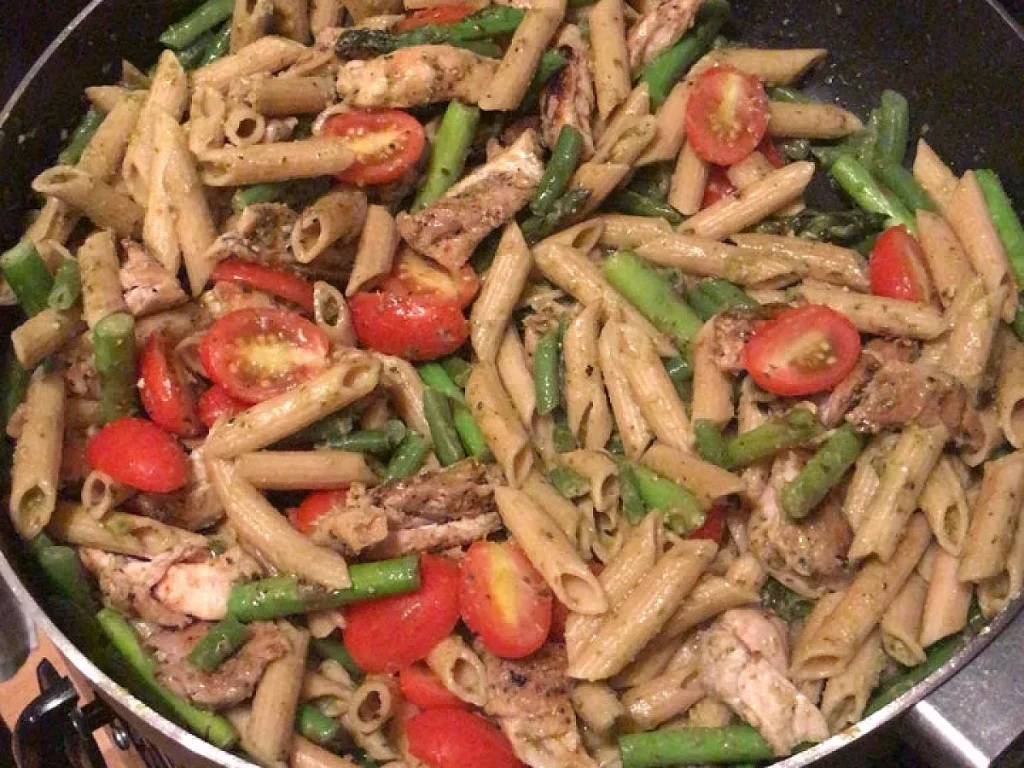
This makes four lunches in about 45 minutes, and the whole thing happens in one skillet. You cook the asparagus, stir in pesto, pasta, and diced chicken, then fold in cherry tomatoes at the end so they stay fresh instead of turning to mush.
The order matters. Asparagus first, because it needs the heat. Tomatoes last, because they don't. Get that right and the containers hold up for four days in the fridge.
One number to remember before you start: chicken needs to hit 165°F in the thickest part. Everything else is timing and taste.
Step-by-Step Instructions
1. Boil the penne
Cook 2 cups of dry whole wheat penne in salted water until just tender, then drain. Pull it a minute early so it doesn't go soft in the fridge.
2. Sear the asparagus
Heat 1 tablespoon of oil in a large nonstick skillet over medium-high heat. Add the asparagus, salt it lightly, and cook about 3 minutes until it starts to soften.
3. Add pesto, pasta, and chicken
Turn the heat down, then stir in 2/3 cup pesto, the drained penne, and 1 pound of diced cooked chicken. Stir until everything is coated and hot.
4. Fold in the tomatoes
Add the halved cherry tomatoes and stir gently for about a minute, just until they're warm. Don't cook them down.
5. Portion into containers
Divide the mixture evenly between four containers. Let them sit uncovered for 15 minutes, then top with chopped parsley and seal.
Tips & Tricks
- Cook the penne one minute less than the package says. It keeps absorbing moisture in the fridge and firm pasta survives that better.
- Dice the chicken small, about half an inch. Big chunks stay cold in the middle when you reheat.
- Let the pasta cool for 15 minutes before you seal the containers. Trapped steam turns everything soggy.
- Use a thermometer on the chicken. 165°F in the thickest part, every time. Color alone won't tell you.
Pro Tips
How to Store Meal Prep Pesto Chicken Pasta
Refrigerator
Sealed containers keep up to 4 days. Let them cool before you close the lid.
Freezer
Freezes for up to 2 months, but the tomatoes will soften a lot. Thaw overnight in the fridge.
Reheating
Microwave 2 to 3 minutes, stirring halfway. Add a splash of water if it looks dry. Reheat to steaming hot, 165°F.
Frequently Asked Questions
Q: Can I use chicken thighs instead of breasts?
Yes. Dice them and cook them through to 165°F first. Thighs actually hold up better over four days because they don't dry out as fast.
Q: Why is my pasta dry by day three?
The pasta soaks up the pesto as it sits. Stir in a spoonful of pesto or a splash of olive oil before reheating, and cook the penne a minute short so it has room to absorb.
Q: Do I have to use whole wheat penne?
No. Regular penne works. Just cook it one minute less than the package says, since it softens faster in the fridge.
Q: How do I know the chicken is done?
Use a food thermometer. It needs to reach 165°F in the thickest piece. Pink color alone isn't a reliable test.
Q: Can I eat this cold?
Sure. It's fine straight from the fridge, though the pasta will be firmer. Most people prefer it warmed.
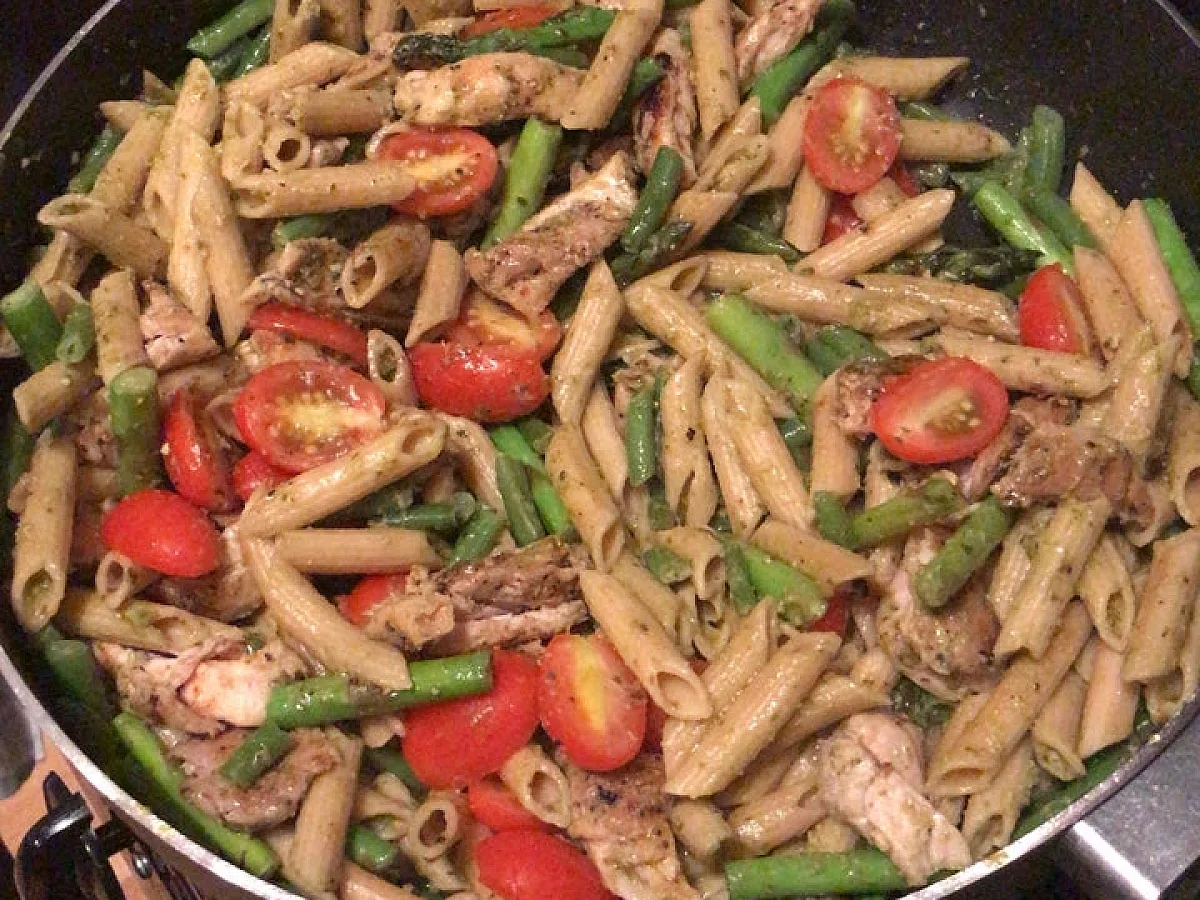
Meal Prep Pesto Chicken Pasta – 4 Easy Weekday Lunches
Tender chicken, whole wheat penne, and asparagus tossed in pesto with cherry tomatoes. Four containers, four days of lunches, one skillet.
Ingredients
Instructions
- 1Boil the penne — Cook 2 cups of dry whole wheat penne in salted water until just tender, then drain. Pull it a minute early so it doesn't go soft in the fridge.
- 2Sear the asparagus — Heat 1 tablespoon of oil in a large nonstick skillet over medium-high heat. Add the asparagus, salt it lightly, and cook about 3 minutes until it starts to soften.
- 3Add pesto, pasta, and chicken — Turn the heat down, then stir in 2/3 cup pesto, the drained penne, and 1 pound of diced cooked chicken. Stir until everything is coated and hot.
- 4Fold in the tomatoes — Add the halved cherry tomatoes and stir gently for about a minute, just until they're warm. Don't cook them down.
- 5Portion into containers — Divide the mixture evenly between four containers. Let them sit uncovered for 15 minutes, then top with chopped parsley and seal.
Food safety: Check the thickest part with a food thermometer. Poultry must reach 165°F (74°C); color alone is not reliable.

Darnell covers air fryer recipes and slow cook meals, with a steady side of eggs and breakfast casseroles for people cooking on a tight schedule. He writes in a blunt, test-it-again voice and flags the mistakes that ruin texture, from soggy fries to rubbery eggs. Every post gives timings, temperatures, and a fallback if your machine runs hot.


Questions or cooking notes?
Ask about an ingredient or share a tip that could help someone else.