
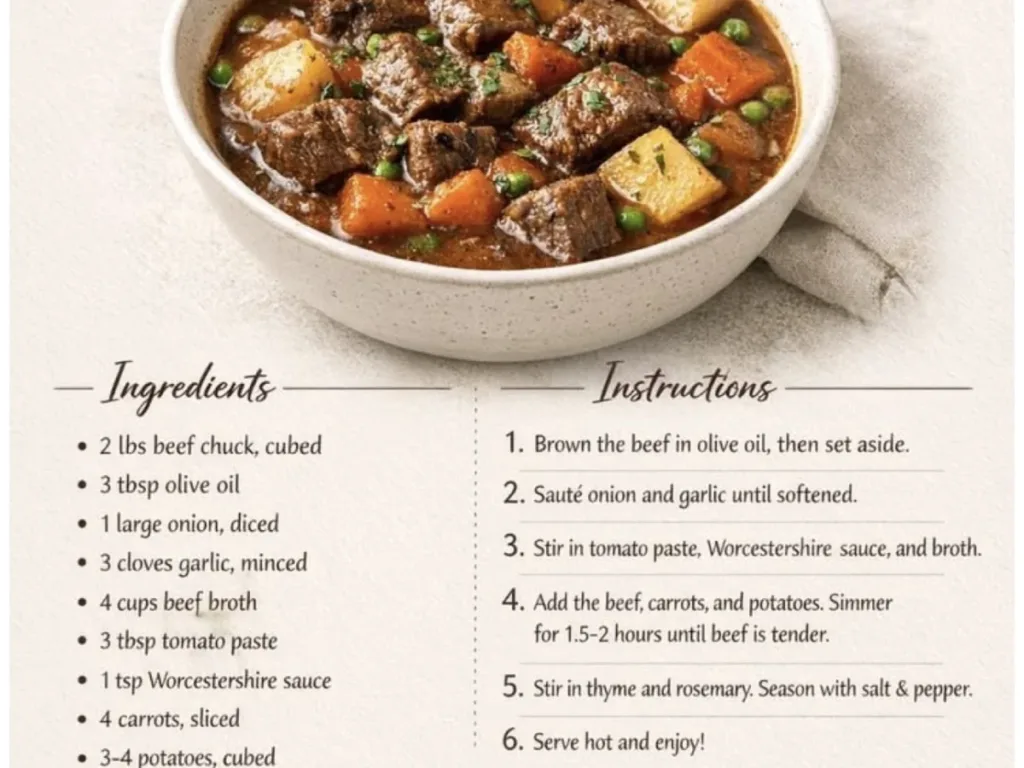
Beef Stew Recipes
Beef stew is hearty and easy to make with just a few ingredients. This recipe delivers rich flavor in under an hour, perfect for a cozy dinner.
Beef stew is a classic dish that warms the soul and fills the stomach. It's also one of the easiest meals to make on a tight schedule.
You can have it ready in less than an hour if you use the right cut of meat and techniques.
The key is to let the flavors develop without overworking the ingredients.
Why You'll Love This Recipe
About the Ingredients
1 pound (450g) chuck roast, cubed
Chuck roast is affordable and full of connective tissue. It becomes tender when cooked slowly. Substitute with beef brisket or any well-marbled cut.
2 tablespoons (30g) olive oil
Olive oil adds a mild flavor and helps brown the meat. Use vegetable oil if you prefer a neutral taste.
1 large onion, chopped
Onion adds sweetness and depth to the stew. Substitute with leeks or a shallot if you want a different flavor.
3 cloves garlic, minced
Garlic gives a strong, aromatic base. Use fresh minced garlic for the best results.
2 cups (400g) diced carrots
Carrots add a natural sweetness and color. Use baby carrots or peeled carrots if you prefer.
1 cup (150g) diced celery
Celery gives a light, fresh flavor. It’s easy to find in most grocery stores.
2 cups (400g) diced potatoes
Potatoes thicken the stew and add heartiness. Use Russet or Yukon Gold potatoes for the best results.
2 cups (500ml) beef broth
Beef broth gives the stew its base. Use low-sodium if you want to control the salt.
1 teaspoon (5g) dried thyme
Thyme adds earthy warmth. Substitute with rosemary or oregano if you want a different taste.
1 bay leaf
Bay leaf adds subtle depth. If you don’t have it, skip it or use a pinch of smoked paprika.
1/2 teaspoon (1g) salt
Salt enhances the flavor. Add more if your broth is low-sodium or if you like it salty.
1/4 teaspoon (0.5g) black pepper
Black pepper adds a sharp kick. Use freshly ground pepper for a more intense flavor.
Step-by-Step Instructions
1. Brown the beef
Heat the olive oil in a large pot over medium-high heat. Add the cubed chuck roast and cook until browned on all sides. This adds a nice flavor to the stew.
2. Sauté the aromatics
Add the chopped onion and minced garlic to the pot. Cook for 3-4 minutes until the onion is soft and translucent. This builds a solid base for the stew.
3. Add the vegetables
Throw in the diced carrots, celery, and potatoes. Stir them into the pot so they get coated with the browned meat and onions.
4. Pour in the broth
Add the beef broth, thyme, and bay leaf to the pot. Bring it to a boil, then reduce the heat to low and let it simmer.
5. Simmer the stew
Let the stew simmer for 35 minutes. The meat should be tender and the vegetables cooked through. Check occasionally to make sure it doesn’t dry out.
6. Season and finish
Season with salt and black pepper to taste. Taste the stew and adjust seasoning if needed. Let it sit for a few minutes before serving.
How to Store Beef Stew Recipes
Refrigerator
Store leftovers in an airtight container for up to 4 days. The stew will thicken slightly as it cools.
Freezer
Pour stew into freezer-safe containers and freeze for up to 3 months. Thaw overnight in the refrigerator before reheating.
Reheating
Reheat the stew over medium-low heat until warmed through. Add a splash of broth or water if it’s too thick.
Tips & Tricks
- Brown the meat first for more flavor. It doesn’t have to be perfect, just a bit seared.
- Don’t overcrowd the pot when browning the meat. Cook in batches if needed.
- Add the vegetables after the meat to avoid them from becoming mushy.
- Stir the stew occasionally to prevent sticking, especially when it’s reducing.
Frequently Asked Questions
Q: Can I use a different cut of beef?
Yes, you can use beef brisket or round roast. Just ensure it's well-marbled for tenderness.
Q: How do I know when the stew is done?
The meat should be tender and the vegetables cooked through. You can test with a fork or knife.
Q: Can I make this stew ahead of time?
Yes, this stew improves in flavor when made a day in advance and reheated gently.
Q: What if I don’t have thyme?
You can use rosemary or oregano instead. Or skip it altogether, the stew will still be good.
Delicious Variations
- Try adding a can of diced tomatoes for a tangy twist.
- Replace the potatoes with parsnips for a slightly sweeter flavor.
- Add a splash of Worcestershire sauce for a deeper umami taste.
This beef stew is a great way to enjoy a comforting meal without spending hours in the kitchen. Feel free to make it your own with your favorite additions or seasonings. Happy cooking, Emily
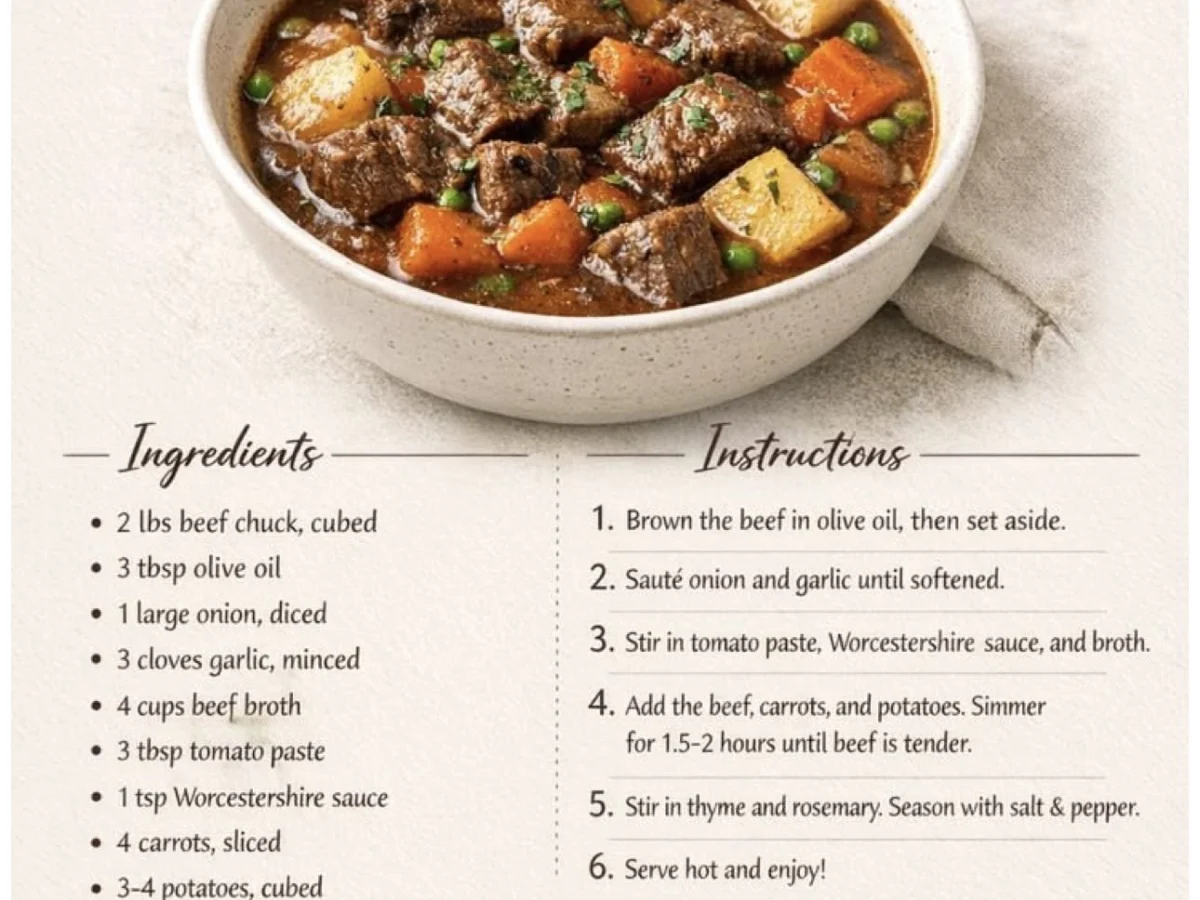
Beef Stew Recipes
Beef stew is hearty and easy to make with just a few ingredients. This recipe delivers rich flavor in under an hour, perfect for a cozy dinner.
🧂 Ingredients
- 1 pound (450g) chuck roast, cubed
- 2 tablespoons (30g) olive oil
- 1 large onion, chopped
- 3 cloves garlic, minced
- 2 cups (400g) diced carrots
- 1 cup (150g) diced celery
- 2 cups (400g) diced potatoes
- 2 cups (500ml) beef broth
- 1 teaspoon (5g) dried thyme
- 1 bay leaf
- 1/2 teaspoon (1g) salt
- 1/4 teaspoon (0.5g) black pepper
📋 Instructions
- 1Brown the beef — Heat the olive oil in a large pot over medium-high heat. Add the cubed chuck roast and cook until browned on all sides. This adds a nice flavor to the stew.
- 2Sauté the aromatics — Add the chopped onion and minced garlic to the pot. Cook for 3-4 minutes until the onion is soft and translucent. This builds a solid base for the stew.
- 3Add the vegetables — Throw in the diced carrots, celery, and potatoes. Stir them into the pot so they get coated with the browned meat and onions.
- 4Pour in the broth — Add the beef broth, thyme, and bay leaf to the pot. Bring it to a boil, then reduce the heat to low and let it simmer.
- 5Simmer the stew — Let the stew simmer for 35 minutes. The meat should be tender and the vegetables cooked through. Check occasionally to make sure it doesn’t dry out.
- 6Season and finish — Season with salt and black pepper to taste. Taste the stew and adjust seasoning if needed. Let it sit for a few minutes before serving.