
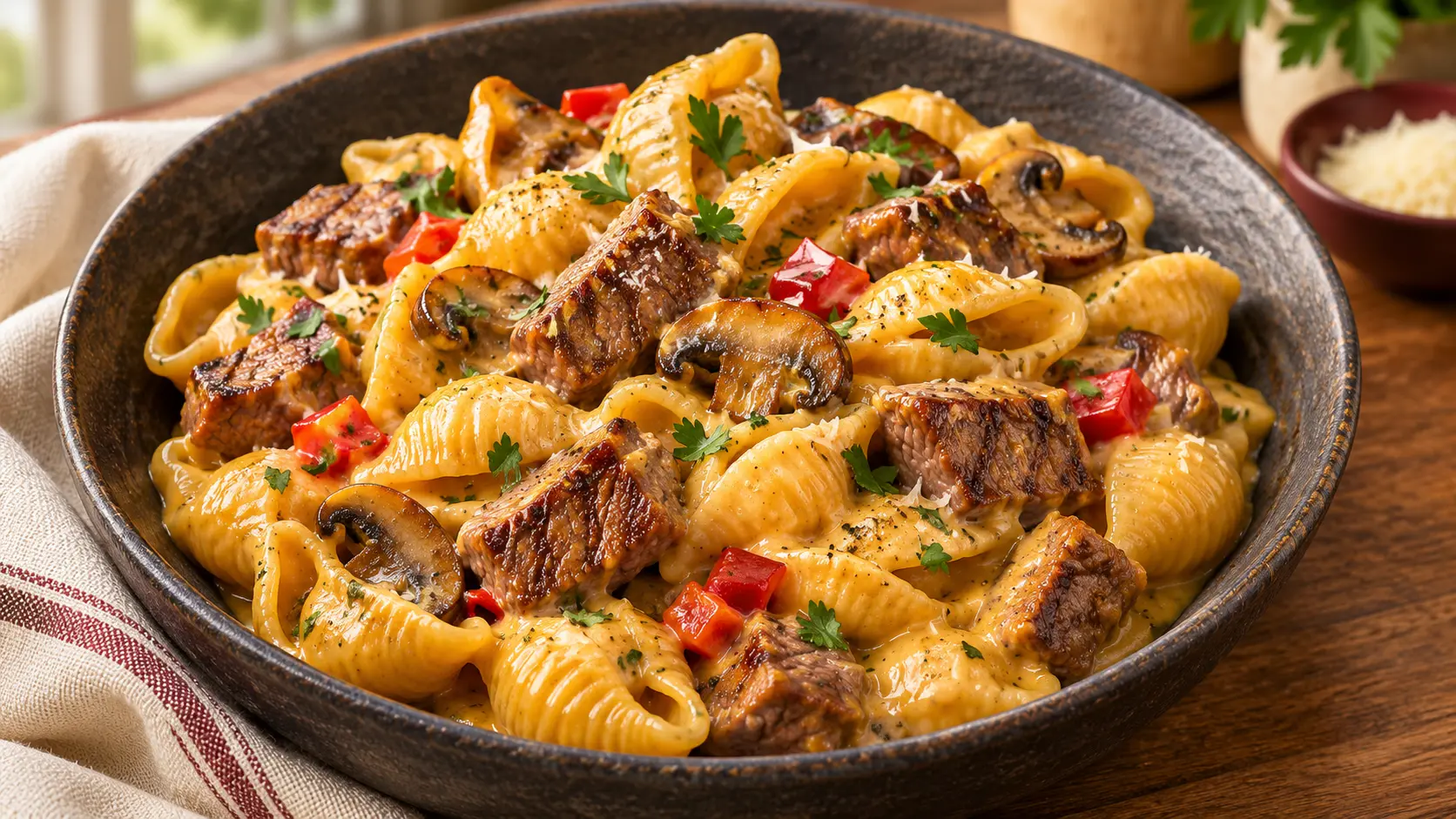
This cheesy steak and shells pasta combines seared sirloin, medium pasta shells, mushrooms, and a cheddar-Parmesan cream sauce. Small pieces of red bell pepper add color, while smoked paprika seasons the sauce. Cook the pasta in a separate pot and finish everything in a deep skillet.
At a glance: Estimated 15 minutes prep + 30 minutes cooking = 45 minutes total. Makes 6 moderate servings. No oven needed.
What kind of pasta dish is this?
This is a stovetop steak pasta, not a stuffed-shell casserole. Medium shells catch the sauce and small vegetable pieces without needing to be filled individually. The meat is cooked separately, then returned at the end so it does not simmer throughout the sauce-making stage.
The supplied image suggests browned beef, shells, a cheese sauce, and herbs, but it cannot establish exact ingredients or amounts. Mushrooms, pepper, and the cheese blend are choices for this adaptation. They are not a claim about the original Pin recipe. This version has not been kitchen-tested by Recipes Cooker; cooking times and yield are estimates.
Choose ingredients that suit a skillet dinner
- Sirloin: Use a tender steak cut, trimmed of tough connective tissue. Stewing beef needs a longer cooking method and is not a direct replacement here.
- Medium shells: Choose regular conchiglie, not jumbo shells intended for stuffing. Weigh the pasta dry so the sauce-to-pasta balance stays consistent.
- Mushrooms: Slice them fairly evenly. Give them time to release moisture and brown before adding the broth.
- Heavy cream: This formulation uses heavy cream. Milk makes a thinner sauce and is not an equal substitute without other changes.
- Cheddar and Parmesan: Shred or grate from a block when practical. Add the cheese off the heat rather than boiling it into the sauce.
How to keep the steak from becoming tough
Pat the steak dry and leave room between the pieces. A crowded pan traps moisture and makes browning harder. If your skillet cannot hold half the steak comfortably, use smaller batches and allow more cooking time.
Use a thin-tip food thermometer in several larger pieces rather than judging doneness from the browned outside. Once the beef reaches at least 145°F (63°C), move it to a clean plate and allow at least 3 minutes of rest. That rest happens while the vegetables and sauce cook, so it does not add a separate stage to the estimated total.
Keep the resting plate away from raw-meat utensils. Return the cooked steak only after the sauce is ready, warming it gently rather than simmering it for several more minutes.
Keep the cheese sauce smooth
Finish cooking the mushrooms before adding liquid. The cream should simmer gently, then the pan comes off the burner before the cheese goes in. Stir in small handfuls so you can see when each addition has melted.
Reserve the pasta water before draining. Add it gradually if the finished sauce looks too thick; you may not need the full cup. The pasta continues absorbing liquid as it sits, so serve promptly rather than reducing the sauce until it is stiff.
Sauce tip: Add reserved pasta water 2 tablespoons at a time. Toss, check the consistency, and add more only if needed. The sauce should coat the shells while remaining loose enough to flow.
Practical substitutions
- Another steak: Boneless strip steak or ribeye can replace sirloin by weight. Trim excess fat and use the same temperature and resting checks.
- Another pasta: Use 12 ounces of dry rotini or short penne, following that package’s cooking directions.
- No mushrooms: Omit them if preferred; the dish will have less vegetable volume. Do not replace their weight with extra dry pasta without adjusting the sauce.
- Milder cheese: Mild cheddar can replace sharp cheddar in the same amount. Flavor and melting behavior may differ.
Ground beef is a different variation, not an interchangeable cooking step. If developing that version, cook ground beef to 160°F (71°C), drain excess fat, and reconsider the sauce seasoning.
What to serve alongside it
A green salad, steamed broccoli, or roasted green beans makes a lighter accompaniment to the rich pasta. Keep portions moderate if adding bread or another substantial side. Browse our Soups, Salads & Sides collection for accompaniments.
Make-ahead, storage, and reheating
Prepare ahead: Slice the vegetables and grate the cheese in advance, then refrigerate separately. Keep raw steak separate from ready-to-eat ingredients and use clean utensils after handling it. For the smoothest sauce, assemble the dish shortly before eating.
Store: Refrigerate leftovers in shallow covered containers within 2 hours, or within 1 hour when the temperature is above 90°F (32°C). Keep at 40°F (4°C) or below and use within 3–4 days.
Reheat: Add a small splash of water and warm gently in a covered skillet, stirring frequently. Alternatively, microwave a covered portion, stirring between intervals. Check several spots and reheat to 165°F (74°C). The steak will cook further during reheating.
Freezing: For texture, refrigeration is preferable for this creamy pasta. Freezing and thawing can make the sauce separate and the pasta softer.
Frequently asked questions
Can I cook the dry shells directly in the sauce?
Not with these quantities. The recipe does not include enough cooking liquid for dry pasta. Boil the shells separately and reserve some of that water for adjusting the sauce.
Why did the sauce become grainy?
Excess heat and adding cheese too quickly can make the sauce less smooth. Remove the pan from the heat before adding cheese. If it starts tightening, stir in a little warm pasta water; a badly separated sauce may not fully recover.
Does this recipe go in the oven?
No. It is finished on the stovetop. Baking would change the cooking time and could overcook the steak.
Can I make the sauce with milk instead of cream?
Milk is not a direct replacement in this formulation. It produces a thinner base and changes how the sauce behaves. A milk-based version would need its own thickening method and testing.
Food safety references
Temperature guidance follows the FoodSafety.gov cooking temperature chart. Storage guidance follows USDA leftover-handling advice, and reheating guidance follows the USDA instructions for reheating leftovers.
RECIPE CARD
Cheesy Steak and Shells Pasta
Seared sirloin, medium shells, mushrooms, and red pepper in a cheddar-Parmesan cream sauce.
Prep: 15 minutes
Cook: 30 minutes
Rest: At least 3 minutes for the steak, included during sauce preparation
Total: 45 minutes
Yield: 6 moderate servings. Time and yield are estimates.
Equipment
Large pasta pot, colander, deep 12-inch skillet, tongs, clean plate, grater, measuring cups and spoons, and a thin-tip food thermometer.
Ingredients
- 12 ounces dry medium pasta shells (conchiglie)
- 1 pound boneless sirloin steak, trimmed and cut into 1-inch pieces
- 2 tablespoons olive oil, divided
- 1 tablespoon unsalted butter
- 8 ounces cremini mushrooms, sliced
- 1/2 cup finely diced red bell pepper
- 3 garlic cloves, minced
- 1/2 teaspoon smoked paprika
- 1 teaspoon kosher salt, divided, plus 1 tablespoon for 4 quarts pasta water
- 1/2 teaspoon ground black pepper
- 3/4 cup low-sodium beef broth
- 1 cup heavy cream
- 1 cup freshly shredded sharp cheddar cheese (about 4 ounces)
- 1/2 cup finely grated Parmesan cheese (about 1 1/2 ounces)
- 2 tablespoons chopped fresh flat-leaf parsley
- Up to 1 cup reserved pasta cooking water, as needed
Instructions
- Cook the shells. Bring 4 quarts water and the 1 tablespoon kosher salt to a boil in a large pot. Cook the shells according to the package directions until al dente. Before draining, reserve 1 cup cooking water. Start the steak while the pasta cooks; do not rinse the drained shells.
- Sear the steak. Pat the steak pieces dry and season with 1/2 teaspoon kosher salt and the black pepper. Heat 1 tablespoon olive oil in a deep 12-inch skillet over medium-high heat. Cook in two uncrowded batches, turning to brown the pieces, about 4–6 minutes per batch or as needed. Check several of the thickest pieces from the side with a thin-tip thermometer; cook to at least 145°F (63°C). Transfer to a clean plate and rest for at least 3 minutes while you cook the vegetables.
- Brown the vegetables. Reduce the heat to medium. Add the remaining 1 tablespoon olive oil and the butter. Add the mushrooms and bell pepper; cook for 6–8 minutes, stirring occasionally, until the mushrooms brown and most released liquid evaporates. Stir in the garlic and smoked paprika for about 30 seconds, just until fragrant.
- Build the cream sauce. Pour in the beef broth and scrape up browned bits that are not burnt; if the pan has blackened residue, remove it before continuing. Simmer for 1 minute. Add the heavy cream and remaining 1/2 teaspoon kosher salt. Bring to a gentle simmer for 3–4 minutes, stirring, until slightly thickened. Avoid a hard boil.
- Melt the cheese. Remove the skillet from the heat. Add the cheddar and Parmesan in small handfuls, stirring until each addition melts. If needed, loosen the sauce with reserved pasta water, 2 tablespoons at a time, until it coats a spoon but still flows.
- Combine and serve. Fold in the drained shells, cooked steak, and juices from the clean resting plate. Warm gently over low heat only as needed, without boiling. Stir in the parsley and serve immediately. Add more reserved pasta water in small amounts if the sauce tightens.
Notes and storage
- Pasta water: Reserve 1 cup but use only what the sauce needs, starting with 2 tablespoons at a time.
- Salt: The listed 1 teaspoon is divided between steak and sauce. The separate tablespoon seasons the pasta pot. Cheese and broth vary in saltiness; taste the finished dish before adding any more.
- Storage: Refrigerate in shallow containers within 2 hours, or within 1 hour above 90°F (32°C). Keep at 40°F (4°C) or below. Use within 3–4 days and reheat to 165°F (74°C).
- Allergens: Contains milk and wheat. Pasta may contain egg; check pasta, broth, and other ingredient labels for additional allergens.
- Nutrition: Nutrition values have not been calculated for this recipe.
Photo-inspired editorial adaptation; not kitchen-tested. Use the thermometer and texture cues rather than relying only on estimated minutes.