
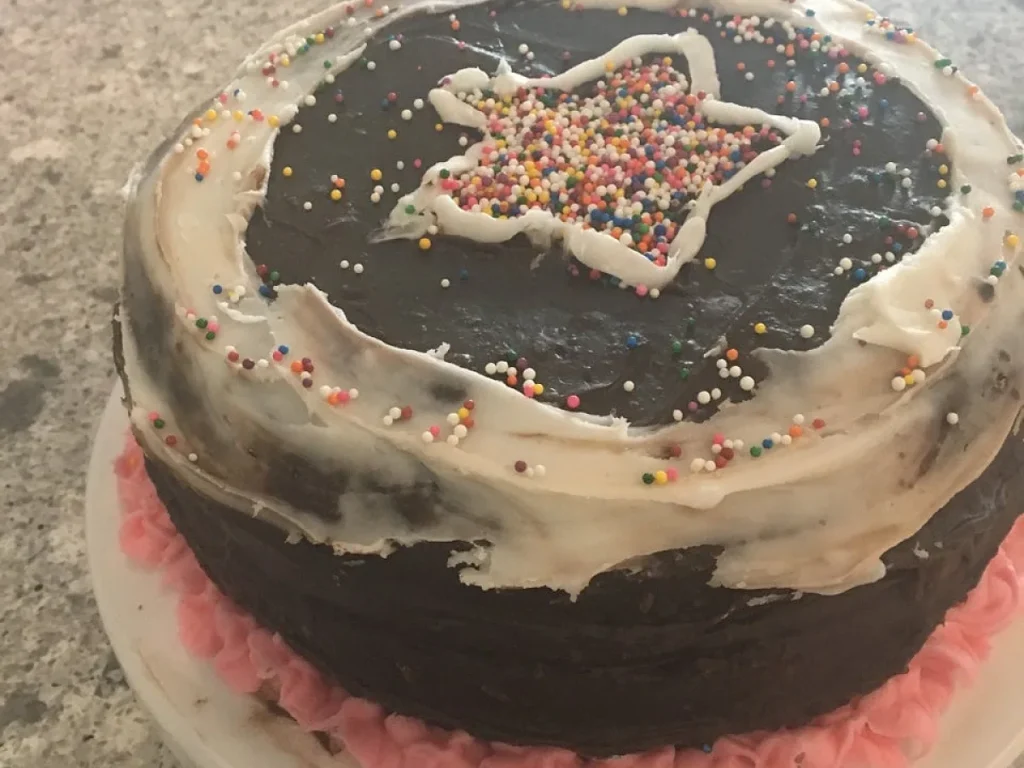
My aunt baked a confetti cake for every birthday in our family, and the thing I remember is the frosting bowl. She'd hand it to whichever kid was closest and let us scrape it clean with a spoon. This version gets close to hers: three layers, soft crumb, sprinkles in the batter and on top.
The one change I made is the frosting. Cream cheese goes in with the butter, which keeps it from tasting like pure sugar. It also means you need to chill the cake partway through decorating, so plan for a short rest in the fridge.
You'll need three 9-inch round pans. If you only own two, bake in two batches and let the pans cool fully between rounds. Warm pans make the batter slump before it hits the oven.
Step-by-Step Instructions
1. Mix the wet base
Stir the buttermilk, vanilla and oil together in a jug or bowl. Leave it on the counter while you do the rest.
2. Whisk the dry ingredients
In a big bowl, whisk the flour with the baking powder, salt and baking soda until no streaks remain. Set it aside.
3. Cream butter and sugars
Beat both sugars with the butter in a large bowl on high for about 4 minutes. You're looking for pale and visibly fluffy, not just combined.
4. Beat in the eggs
Add the eggs and yolks one at a time, mixing between each. Keep beating for about 5 minutes after the last one, until the mixture looks almost doubled and very light.
5. Alternate flour and buttermilk
Turn the mixer to low. Add a third of the flour mix, then half the buttermilk mix before it's fully absorbed. Repeat, finishing with the last of the flour, and stop as soon as it's smooth.
6. Heat the oven and prep pans
Set the oven to 350°F (180°C). Spray three 9-inch round pans, covering the sides too.
7. Fold in the sprinkles
Add 1/2 cup of sprinkles and fold gently with a spatula just until they're spread through. Overmixing smears the color.
8. Fill and bake
Divide the batter evenly among the pans. Put two pans on the top rack and one on the middle rack. Bake 30 minutes, swapping the middle pan to the top and one top pan down halfway through.
9. Check for doneness
The layers are ready when they're golden, the edges pull away from the pan, and the center springs back when you press it lightly. A toothpick in the middle should come out clean.
10. Cool the layers
Turn the cakes out onto a wire rack and let them cool completely. No rack? Leave them in the pans on the counter until cool.
11. Beat the frosting base
Beat the butter, cream cheese and pinch of salt on high for about 4 minutes, until light and creamy. Scrape the bowl once or twice.
12. Add the sugar
Mix the powdered sugar in on low so it doesn't fly everywhere. Then beat on high for about 5 minutes, until the frosting is fluffy and white with no lumps.
13. Stack and crumb coat
Put a small spoonful of frosting on your stand or plate to anchor the first layer. Spread frosting on top, add the next layer, frost that, then add the third. Cover the outside thinly with the rest of what's in the bowl. That's your crumb coat.
14. Chill 20 minutes
Put the whole cake in the fridge for 20 minutes. This sets the crumb coat so the final layer goes on clean.
15. Finish the sides
Frost the cake with the remaining icing in an even layer. For the ribbed look, press the tip of an offset spatula or knife against the frosting near the bottom, spin the cake, and lift slowly as you turn. Smooth the top flat.
16. Add the sprinkles
Press sprinkles around the bottom edge. Set a small cookie cutter anywhere on top, fill it with sprinkles, and lift it straight up.
How to Store Ultimate Confetti Cake
Refrigerator
Covered, the cake keeps 4 days in the fridge. Let slices sit out 20 minutes before eating so the frosting softens.
Freezer
Unfrosted layers wrap well in plastic and foil and freeze up to 2 months. Thaw overnight in the fridge. Frosted slices freeze up to 1 month.
Reheating
Don't reheat this one. Cold cake is fine, and a microwave will melt the frosting into a puddle.
Tips & Tricks
- Room temperature really matters here. Cold butter and cold cream cheese both cause a lumpy batter or frosting, and neither fixes itself once mixed.
- Weigh your flour if you can. Four cups scooped straight from the bag can weigh far more than four cups spooned and leveled.
- Don't skip the 20-minute chill after the crumb coat. It stops the layers from sliding while you do the final pass.
Variations
Chocolate confetti cake
swap 3/4 cup of the flour for cocoa powder and add another 1/4 cup buttermilk. The layers come out darker but the sprinkles still pop.
Sheet cake version
bake the whole batch in a 9×13-inch pan and add roughly 5 to 8 minutes to the bake time. Frost it right in the pan.
- Vanilla buttercream instead of cream cheese: use 3 sticks of butter with 4 cups powdered sugar and a splash of vanilla. It's sweeter and holds up better in warm rooms.
Frequently Asked Questions
Q: Can I make the cake layers a day ahead?
Yes, and it's easier that way. Bake them, cool completely, wrap each layer tightly in plastic, and keep them at room temperature overnight or in the fridge for two days. Cold layers actually frost more cleanly.
Q: Why did my sprinkles bleed into the batter?
Two reasons: the wrong kind of sprinkle, or too much stirring. Use the long rod-style sprinkles and fold them in at the very end with a spatula. Nonpareils and sanding sugar will always bleed.
Q: Can I use a stand mixer instead of a hand mixer?
Absolutely, and the times stay the same. Use the paddle attachment and scrape the bowl down whenever you add something new.
Q: How do I know the layers are baked through?
Press the center gently. It should spring back instead of leaving a dent. The edges will also start pulling away from the pan. If you're unsure, a toothpick inserted in the middle should come out with no wet batter.
Q: Can I halve the recipe?
You can, but the math gets awkward with 4 eggs plus 4 yolks. It's easier to bake the full batch and freeze the extra layer, or make cupcakes with any leftover batter. Fill the cups about two-thirds full and start checking at 18 minutes.
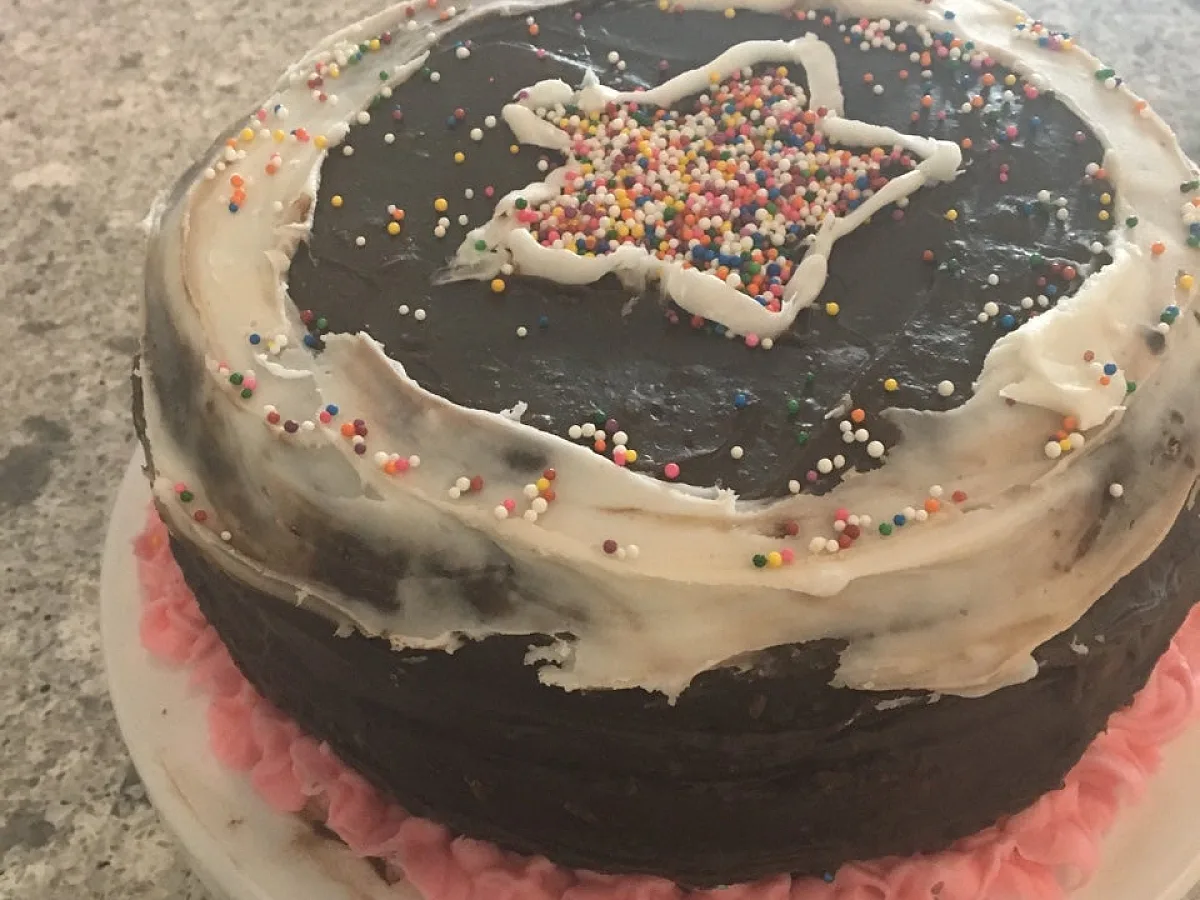
Ultimate Confetti Cake With Cream Cheese Frosting
Three layers of soft vanilla buttermilk cake packed with rainbow sprinkles, stacked with tangy cream cheese buttercream and finished with more sprinkles.
Ingredients
Instructions
- 1Mix the wet base — Stir the buttermilk, vanilla and oil together in a jug or bowl. Leave it on the counter while you do the rest.
- 2Whisk the dry ingredients — In a big bowl, whisk the flour with the baking powder, salt and baking soda until no streaks remain. Set it aside.
- 3Cream butter and sugars — Beat both sugars with the butter in a large bowl on high for about 4 minutes. You're looking for pale and visibly fluffy, not just combined.
- 4Beat in the eggs — Add the eggs and yolks one at a time, mixing between each. Keep beating for about 5 minutes after the last one, until the mixture looks almost doubled and very light.
- 5Alternate flour and buttermilk — Turn the mixer to low. Add a third of the flour mix, then half the buttermilk mix before it's fully absorbed. Repeat, finishing with the last of the flour, and stop as soon as it's smooth.
- 6Heat the oven and prep pans — Set the oven to 350°F (180°C). Spray three 9-inch round pans, covering the sides too.
- 7Fold in the sprinkles — Add 1/2 cup of sprinkles and fold gently with a spatula just until they're spread through. Overmixing smears the color.
- 8Fill and bake — Divide the batter evenly among the pans. Put two pans on the top rack and one on the middle rack. Bake 30 minutes, swapping the middle pan to the top and one top pan down halfway through.
- 9Check for doneness — The layers are ready when they're golden, the edges pull away from the pan, and the center springs back when you press it lightly. A toothpick in the middle should come out clean.
- 10Cool the layers — Turn the cakes out onto a wire rack and let them cool completely. No rack? Leave them in the pans on the counter until cool.
- 11Beat the frosting base — Beat the butter, cream cheese and pinch of salt on high for about 4 minutes, until light and creamy. Scrape the bowl once or twice.
- 12Add the sugar — Mix the powdered sugar in on low so it doesn't fly everywhere. Then beat on high for about 5 minutes, until the frosting is fluffy and white with no lumps.
- 13Stack and crumb coat — Put a small spoonful of frosting on your stand or plate to anchor the first layer. Spread frosting on top, add the next layer, frost that, then add the third. Cover the outside thinly with the rest of what's in the bowl. That's your crumb coat.
- 14Chill 20 minutes — Put the whole cake in the fridge for 20 minutes. This sets the crumb coat so the final layer goes on clean.
- 15Finish the sides — Frost the cake with the remaining icing in an even layer. For the ribbed look, press the tip of an offset spatula or knife against the frosting near the bottom, spin the cake, and lift slowly as you turn. Smooth the top flat.
- 16Add the sprinkles — Press sprinkles around the bottom edge. Set a small cookie cutter anywhere on top, fill it with sprinkles, and lift it straight up.

Priya writes about eggs and breakfast casseroles, cookies and bars, and slow cook breakfasts that feed a crowd without fuss. Her angle is flexible, budget-minded cooking: one base recipe that scales for two or for a holiday table, with clear notes on freezing and reheating. She keeps the writing light and story-first, then lands on a tight recipe card.
Questions or cooking notes?
Ask about an ingredient or share a tip that could help someone else.